
Why do you go to a farmer’s market? Is it because it’s the popular thing to do? Are you striving for a healthier lifestyle? Maybe you just want to support your local farmer. Whatever the reason, the farmer’s market has become a staple in our vernacular. It is still, for many of us (maybe just me), an enigmatic phenomenon of epic proportion!!
Please don’t misunderstand, I have no beef (LOL!!) with farmers’ markets. In fact, in theory, I actually like them. I like the notion of shopping in a place where the food is fresh and healthier versions of my favorite foods are available. A place where local craftsmen offer homemade options of both foods and household items. Y’know what I mean? Real wood is used not MDF, there’re apples in the apple pie, not apple preserves….you know? What I have noticed, however, is that my version of a farmers market isn’t necessarily another man’s version of a farmers market. In fact, all farmers’ markets aren’t even created equally! There are good farmer’s markets, then there are some really really bad ones. While I can’t critique all of them, here are some things you may want to know.
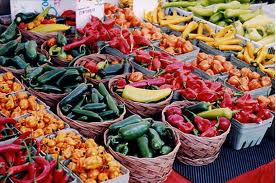
First, let’s get this out of the way — a couple of guys selling boiled peanuts and a potted plant on the side of a highway doesn’t constitute a farmer’s market. Don’t send me there! There are specific and legal guidelines around farmers’ markets, including permits, licenses and insurance. I’m happy to buy from the guy on the side of the road but….I’m just sayin’.
In any case, personal preferences aside, I’d like to touch on one particular point. At many farmers’ markets (even at the stand on the side of the road) food may be labeled organic or locally grown. I’m not sure that everyone is aware of the differences in those titles.
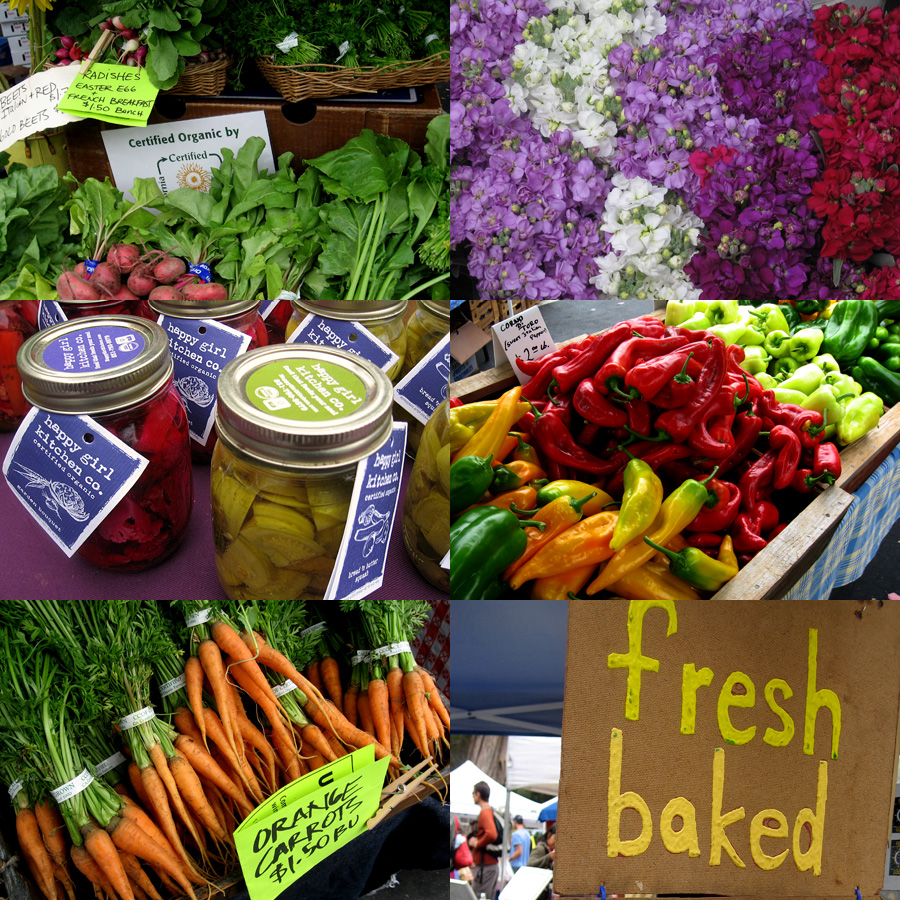
The term organic, defines a product that must be free of pesticides/chemicals, hormones or genetic modification. It is a much more difficult standard to achieve, and certain guidelines must be met. For example, the farm land must be certified chemical-free for at least three years before the end product may be categorized as organic; a chicken farmer may not use antibiotics or hormones; a diary farmer must provide its cattle access to the outdoors so the animals can wander and graze as nature intended (you may have heard the term “free range”).
Local, is entirely different. All “local” means is that this product was grown or made in the nearby area (and nearby is a relative term). The farmer may have used pesticides on any of the produce, just as you may have used on your own lawn (the lawn that shares its soil with your obligatory Florida orange tree!). A local cow that was given growth-enhancing hormones may have had her milk used to make cheese. A local farmer may even sell home-grown GMO’s (genetically modified organisms are foods/plants have been modified in the laboratory to enhance desired traits such as increased resistance to herbicides or improved nutritional content). The truth is, you just don’t know if synthetic methods are employed in the growth or preparation of the “healthy” foods you are buying. All you know is that your end product was grown or created locally.
The best case scenario, I think, is a label that says “organic” and “local”! This usually means your dollars stay within your community, and a much higher percentage of those dollars will go directly to the farmer. If your local farmer is supplying organic produce, your dollar is also encouraging his responsible stewardship of the land. Tis is a good thing!!
If you’re looking for local produce, get familiar with the local landscape. Florida has thousands of acres of citrus groves that produce oranges, lemons, and grapefruits year-round. In fact, state growers have gone so far as to patent “Florida Oranges” to make sure that oranges labeled from Florida really do come from Florida! The Sunshine State also has several hundred miles of coastline from which Atlantic and Gulf of Mexico seafood is harvested. Keep in mind, also, that Florida has a semi-tropical climate which means a year-round growing season and plenty of tropical fruits. Mangos, guava, and passion fruit are all grown in Florida. Many of the common fruits and vegetables grown in other states have different growing seasons, so be vigilant in pairing the season with the fruit. For instance, winter strawberries come from Florida, as do winter green beans and eggplants. It’s just a matter of finding out what’s in season before you shop.
While I could go on forever, the real purpose of this diatribe is to make, what I think, is an important distinction. Whether a farmer’s market or any market (stock, grocery, etc), it’s important to know the terms that are being used. The choice to use those terms, or buy those products is up to you. Even if you’re going to the farmer’s market just because it’s trendy, you can still toss the words around like a pro. More importantly, be wise about getting what you really want in the products you purchase.
For further information go to:
Florida State Farmers’ Market – http://www.florida-agriculture.com/farmmkt/ – This is the Florida Department of Agriculture and Consumer Services website about farmers’ markets. It includes links to locations and contacts, a produce availability chart, a cookbook and a nutrition program. The State Farmers’ Market mission and overview are also on this site.
USDA Farmers’ Markets – http://www.ams.usda.gov/farmersmarkets/ – This website is designed by the USDA to give you a list of farmers’ markets in your state, a Farmers’ Market Fact Sheet and information about starting a farmers’ market. The site also includes a kids section, and a resource and information section.
Farmers’ Market Online – www.farmersmarketonline.com – This farmers’ market is entirely online providing a place for sellers, growers and consumers from around the world to meet, buy and sell. The market sells specialty foods, pet supplies and crafts in addition to traditional farmers’ market purchases.
